The Evolution of Textile Design Technology: From Handcraft to Digital Mastery
Textile design is an art form that has clothed humanity, adorned interiors, and shaped culture for thousands of years. Yet, behind every beautiful fabric lies a story not just of creativity, but of innovation. The tools, techniques, and technologies for creating textiles have undergone seismic changes—each leap propelling the industry to new heights of possibility. Today’s textiles are the product of centuries of evolution, blending ancient artistry with cutting-edge innovation. This article explores the fascinating journey of textile design technology: where it began, how it transformed, and where it’s heading next.
From Ancient Craftsmanship to Mechanized Marvels
Long before the industrial age, textile design was a painstaking, manual process. Early civilizations, from the Egyptians weaving linen as early as 5000 BCE to the Chinese mastering silk production by 2700 BCE, relied on simple handlooms, plant-based dyes, and natural fibers. Patterns were created by skilled artisans, thread by thread, often taking weeks or even months to complete a single piece.
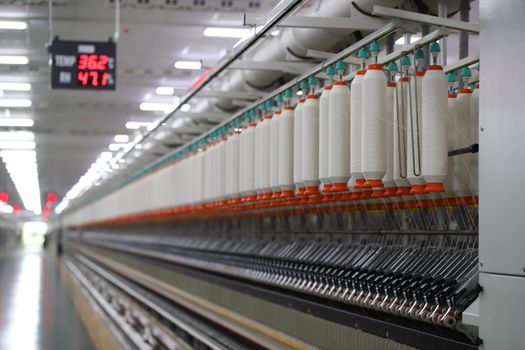
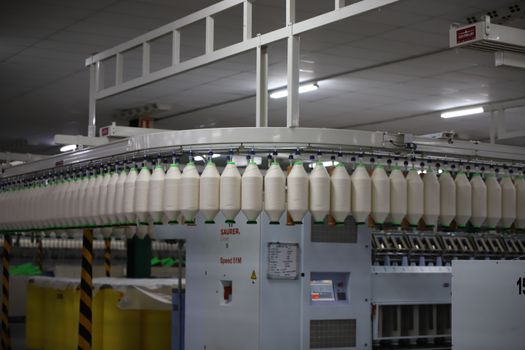
The first major leap came with the invention of the spinning wheel around the 11th century in India, which greatly increased yarn production speed. By the 18th century, the Industrial Revolution transformed textile manufacturing. Innovations such as the flying shuttle (1733), spinning jenny (1764), and water frame (1769) mechanized weaving and spinning, slashing production time and costs while making complex patterns more accessible.
.png)
One of the most significant breakthroughs for textile design was the Jacquard loom, invented in 1804 by Joseph Marie Jacquard. This programmable loom used punch cards to control the weaving of intricate patterns, laying the groundwork for automation in textile design. In fact, the Jacquard loom’s punch card system would later inspire early computer programming.
Printing and Dyeing: Expanding the Palette
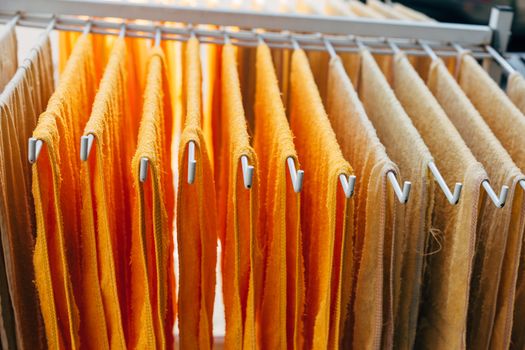
Textile design is not just about structure—color and pattern play a central role. Early dyeing techniques were natural and labor-intensive, with artisans extracting hues from plants, minerals, and insects. Indigo, madder, and cochineal, for example, were prized sources of blue, red, and crimson.
The 19th century saw a revolution in dye chemistry. In 1856, William Henry Perkin accidentally discovered the first synthetic dye—mauveine—while attempting to synthesize quinine. This sparked an explosion in color possibilities: by 1900, there were over 400 synthetic dyes, vastly expanding the designer’s palette.
Printing technology also evolved. Early block printing, dating back to ancient China, was slow and limited in detail. Roller printing, invented in 1783, allowed continuous patterns to be printed on fabric, speeding up production. The 20th century introduced screen printing, which remains popular for bold, layered designs.
Digital printing, developed in the 1990s, was a game-changer. By using inkjet technology, designers could print virtually any image onto fabric with vibrant color and photographic detail, at both small and industrial scales. This democratized textile design, enabling short runs and rapid prototyping.
CAD and Computerization: Precision Meets Creativity
Perhaps the most profound shift in textile design technology is the advent of computer-aided design (CAD). Before the 1980s, designers drew patterns by hand, using graph paper to plan repeats and colorways. This was labor-intensive and prone to error.
With the introduction of CAD software in the 1980s and 1990s, textile designers gained unprecedented control and efficiency. CAD allows users to create, modify, and visualize patterns digitally, testing color combinations, repeats, and fabric simulations instantly. This not only accelerates the design process but also reduces waste by minimizing physical sampling.
Modern CAD systems integrate with digital looms and printers, streamlining the path from concept to finished fabric. Designers can even create 3D simulations of garments or interiors, allowing for virtual prototyping and faster decision-making.
Smart Textiles and Digital Fabrics: The New Frontier
In the 21st century, textile design is entering a new era—one where fabrics are not just decorative, but interactive. Smart textiles, or e-textiles, embed electronics, sensors, and conductive fibers directly into the fabric. These innovations are opening up entirely new realms of functionality, from health monitoring to responsive fashion.
For example, a 2020 market report by Grand View Research estimated the global smart textiles market at $2.1 billion, projected to grow at a compound annual growth rate (CAGR) of 30.4% through 2027. Applications range from sportswear that tracks biometrics to hospital gowns that monitor patient vitals, and even clothing that changes color or pattern in response to environmental cues.
Digital fabrication techniques such as 3D knitting and laser cutting are also transforming what’s possible in textile design. Brands like Adidas and Nike have embraced 3D-knitted uppers for lightweight, waste-reducing footwear. Designers can now create seamless, complex structures that would be impossible by hand or traditional machines.
Sustainability and the Tech-Driven Future of Textile Design
As the textile industry faces growing scrutiny over its environmental impact, technology is emerging as a powerful tool for sustainability. Digital design and production methods help reduce water, chemical, and material waste. For example, digital printing uses up to 95% less water than traditional dyeing processes, according to Kornit Digital.
New software tools enable designers to simulate the environmental footprint of their choices, from fiber selection to finishing. Artificial intelligence (AI) is being used to optimize fabric patterns for minimal waste, while blockchain technology is helping to ensure transparency and traceability in the supply chain.
Biotechnology is another frontier: companies are developing lab-grown fibers (like spider silk from Bolt Threads) and bio-based dyes that reduce reliance on petrochemicals. These technological advances are not just about efficiency—they are shaping a more sustainable, ethical future for textile design.
Comparing Key Textile Design Technologies: Past and Present
To better appreciate the evolution of textile design technology, here’s a comparison of traditional and modern methods across key stages:
| Stage | Traditional Method | Modern Technology | Key Advantages |
|---|---|---|---|
| Weaving | Handloom, Jacquard loom | Computerized looms (e.g., digital Jacquard) | Speed, precision, complex patterns |
| Printing | Block, roller, screen printing | Digital inkjet printing | Customization, low waste, rapid prototyping |
| Design | Hand drawing, graph paper | CAD software | Flexibility, error reduction, 3D simulation |
| Dyeing | Natural dyes, manual vat processes | Synthetic dyes, digital dyeing, bio-dyes | Expanded color range, sustainability, efficiency |
| Fabrication | Manual sewing, traditional knitting | 3D knitting, laser cutting, e-textiles | Innovative structures, smart functions, less waste |
The Global Impact: How Textile Design Technology Shapes Culture and Commerce
The evolution of textile design technology has had profound impacts beyond the factory floor. Globally, the textile and apparel industry is valued at $1.5 trillion (Statista, 2023), providing employment for over 300 million people. Advancements in design technology have democratized creativity, allowing independent designers and small brands to compete with industry giants.
Culturally, new technologies have enabled the preservation and reinvention of traditional patterns. Digital archives and CAD allow endangered textile motifs—from African kente to Japanese kasuri—to be reproduced and adapted for modern tastes. Virtual design communities now connect artisans and consumers across continents, fostering innovation and cultural exchange.
The COVID-19 pandemic further accelerated digital transformation, with virtual sampling, 3D modeling, and online collaboration becoming industry standards. According to a 2022 McKinsey survey, over 70% of fashion brands now use 3D design tools to speed up product development and reduce physical waste.
Final Reflections: Textile Design’s Ongoing Evolution
From hand-spun linen to programmable fabrics, the evolution of textile design technology tells a story of relentless innovation. Each advancement—whether the Jacquard loom, synthetic dyes, CAD, or smart textiles—has expanded what designers can imagine and what the industry can produce.
Yet, the journey is far from over. As digital and sustainable technologies mature, the next chapters in textile design will be written by those who can blend tradition with invention, artistry with efficiency, and creativity with conscience. For consumers, designers, and makers alike, the fabric of the future is not just smarter and more beautiful, but also more sustainable and inclusive.