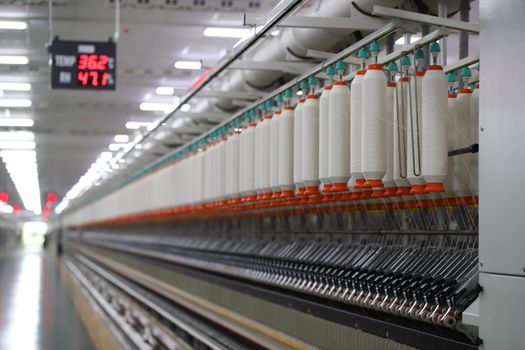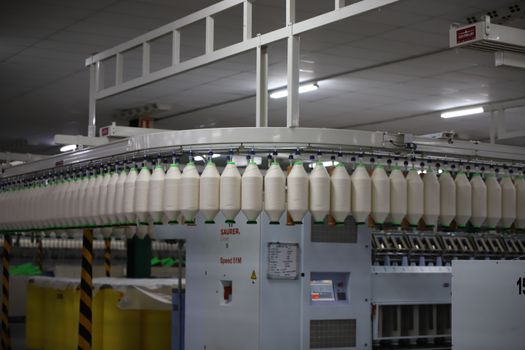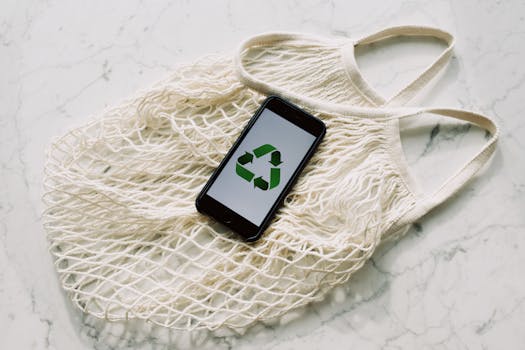
As the global fashion and textile industries grapple with the environmental impact of production and waste, textile material recycling has emerged as a transformative force. The latest trends in textile material recycling are not just about reusing old clothes, but about leveraging technological innovation, new business models, and cross-industry collaboration. These changes are dramatically reshaping how textiles are sourced, processed, and reintroduced into the supply chain, offering hope for a more sustainable future.
The Urgency Behind Textile Material Recycling
Textile waste is a mounting problem worldwide. According to the Ellen MacArthur Foundation, over 100 billion garments are produced annually, yet less than 1% of clothing is recycled into new garments. The U.S. Environmental Protection Agency (EPA) reported that in 2018, Americans generated 17 million tons of textile waste, with only 2.5 million tons recycled. The rest ended up in landfills or incinerators, contributing to greenhouse gas emissions and environmental pollution.
This urgent scenario has catalyzed a wave of innovation across the textile sector. Brands, researchers, and technology startups are racing to develop solutions that keep materials in use longer, reduce resource consumption, and create closed-loop systems. These efforts align with the principles of the circular economy, where waste is minimized and materials are perpetually cycled back into production.
.png)
New Recycling Technologies: Chemical vs. Mechanical Processes
Historically, most textile recycling relied on mechanical processes, such as shredding and re-spinning fibers. While effective for certain materials like cotton and wool, mechanical recycling often results in lower-quality fibers, limiting their reuse in high-value textiles.
Recent years have seen a surge in chemical recycling innovations. Chemical recycling breaks down polymers at the molecular level, allowing for the extraction and purification of raw materials that can be reused to create fibers nearly identical to virgin materials.
Here’s a comparative overview of the two main textile recycling approaches:
| Process | Suitable Materials | Output Quality | Environmental Impact |
|---|---|---|---|
| Mechanical Recycling | Natural fibers (cotton, wool); some synthetics | Lower (shorter, weaker fibers) | Low energy, no chemical use but limited reuse potential |
| Chemical Recycling | Polyester, nylon, blended fabrics | High (fibers comparable to virgin quality) | Higher energy, some chemical use, but potential for full circularity |
Companies like Worn Again Technologies and Renewcell are pioneering chemical recycling at scale. Renewcell, for instance, transforms old textiles into Circulose, a dissolving pulp used to make new viscose and lyocell fibers. In 2023, the company processed over 40,000 tons of textile waste, demonstrating the scalability of such solutions.
Innovative Fiber-to-Fiber Recycling: Closing the Loop
A significant innovation is the rise of fiber-to-fiber recycling, where used garments are recycled directly into new textile fibers, enabling a truly circular system. Traditionally, most recycled textiles were downcycled into products like insulation or cleaning rags. Now, advanced sorting, separation, and purification technologies are making true fiber-to-fiber recycling possible—even for complex blends.
For example, the Swedish company Södra has developed a process to separate and recycle cotton and polyester blends, a challenge that previously hindered recycling efforts. Their technology can process up to 25,000 tons of blended textiles annually, with plans to increase capacity. Similarly, the Hong Kong Research Institute of Textiles and Apparel (HKRITA) has created a hydrothermal system that separates and recycles blended fabrics without harmful solvents.
These innovations are crucial because blended fabrics comprise about 60% of global textile production, according to Textile Exchange. Unlocking the ability to recycle these blends could dramatically increase recycling rates.
Digital Technology and AI in Textile Recycling
Digital innovation is another game-changer in textile material recycling. Artificial intelligence (AI) and machine learning are being used to automate sorting and grading of textile waste, a process that was traditionally labor-intensive and prone to contamination.
Companies like Fibersort and TOMRA Sorting Solutions are deploying automated sorting lines equipped with near-infrared (NIR) sensors. These systems can identify fiber types and colors at speeds up to three tons per hour with over 90% accuracy. Better sorting improves the purity and quality of recycled fibers, making them more suitable for high-value applications.
Blockchain technology is also being introduced to track the provenance and lifecycle of recycled materials, building transparency and trust in recycled-content products. For instance, the textile traceability platform TrusTrace has enabled brands to verify the recycled content in garments, supporting consumer demand for genuine sustainability claims.
Emerging Business Models and Industry Collaboration
As recycling technologies evolve, new business models are emerging to support textile material recycling at scale. Extended Producer Responsibility (EPR) schemes are gaining traction, requiring brands to take responsibility for the collection and recycling of post-consumer textiles.
In 2022, France became the first country to mandate EPR for textiles, requiring producers to finance the collection and recycling of used clothing. In its first year, over 250,000 tons of textiles were collected, demonstrating the potential impact of such policies.
Collaboration across the value chain is also accelerating progress. The Accelerating Circularity initiative, for example, brings together brands, recyclers, and manufacturers to pilot fiber-to-fiber recycling systems in the United States and Europe. Their 2023 pilot in the U.S. diverted over 500,000 pounds of post-consumer textiles from landfills, converting them into recycled fibers for new garments.
Consumer Engagement and the Role of Eco-Design
While technological innovation is vital, consumer participation remains critical to the success of textile recycling. Brands are increasingly incentivizing take-back programs, where customers return used garments in exchange for discounts or rewards. In 2021, H&M collected over 18,000 tons of unwanted textiles through its global Garment Collecting program.
Eco-design is also shaping the future of textile recycling. Designers are being encouraged to create garments that are easier to recycle, using mono-materials or easily separable components. The Ellen MacArthur Foundation’s “Jeans Redesign” project, for instance, sets design guidelines for denim that ensure recyclability and longevity.
Challenges and Future Outlook for Textile Material Recycling
Despite the progress, significant challenges remain. The diversity and complexity of textile products, the prevalence of mixed fibers, and the lack of standardized collection systems all hinder higher recycling rates. According to the European Environment Agency, only 15-20% of textile waste is collected separately for reuse or recycling in Europe.
Scaling up innovative recycling technologies requires substantial investment and supportive regulatory frameworks. Moreover, educating consumers and shifting mindsets toward a circular approach to clothing consumption is an ongoing process.
Nevertheless, the momentum behind textile material recycling is undeniable. The global textile recycling market is projected to grow from $5.6 billion in 2022 to $8.1 billion by 2028, according to IMARC Group. As innovation continues, the industry is moving closer to a future where textile waste becomes a valuable resource rather than a burden.
Looking Ahead: Textile Material Recycling’s Transformative Potential
The latest trends in textile material recycling highlight an industry in the midst of profound change. From advanced chemical recycling and AI-enabled sorting to new policy frameworks and consumer-driven initiatives, the field is quickly evolving. These innovations are not only mitigating the environmental impact of textile waste but also creating new economic opportunities and supply chain resilience.
As more brands, consumers, and policymakers embrace the principles of circularity, textile material recycling will play a central role in building a sustainable fashion ecosystem for the future.