The textile industry is often seen as both a cornerstone of global manufacturing and one of the world’s most resource-intensive sectors. It has historically been associated with enormous water consumption, high energy needs, and significant waste. However, as consumer awareness grows and environmental regulations tighten, the industry is undergoing a remarkable transformation. At the heart of this transformation are innovations that leverage cutting-edge technology to improve sustainability across the entire textile value chain. From smart manufacturing systems to revolutionary recycling methods, these advancements are paving the way for a greener, more responsible future.
The Environmental Impact of Traditional Textile Production
For decades, the textile industry has contributed significantly to pollution and resource depletion. According to the World Bank, textile dyeing and treatment are responsible for 20% of global industrial water pollution. The sector also consumes approximately 93 billion cubic meters of water annually—enough to meet the needs of five million people. Additionally, textile production emits around 1.2 billion tons of CO2 equivalent each year, surpassing the combined emissions of international flights and maritime shipping.
Traditional textile manufacturing relies heavily on resource-intensive processes such as cotton cultivation, which requires vast amounts of water and pesticides, and chemical dyeing, which releases toxic effluents into waterways. Moreover, less than 1% of clothing is recycled into new garments, contributing to the estimated 92 million tons of textile waste generated annually worldwide.
.png)
These stark figures highlight the urgent need for sustainable innovation. Fortunately, new technologies are being developed and implemented to address these challenges and create a more sustainable textile industry.
Smart Manufacturing: Digitalization and Automation for Sustainability
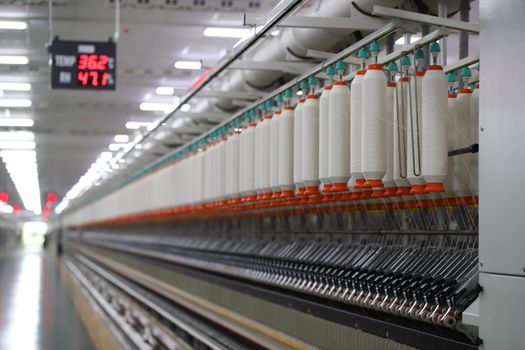
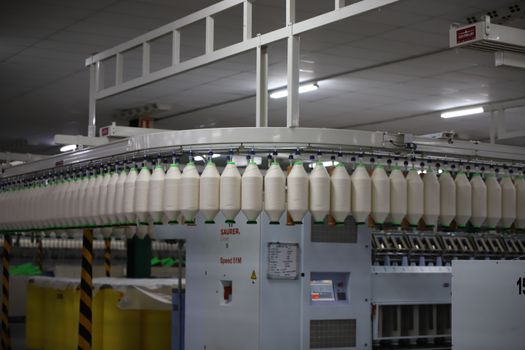
One of the most significant shifts in recent years has been the integration of digital technologies into textile manufacturing. This movement, often referred to as “Industry 4.0,” encompasses the use of Internet of Things (IoT) devices, artificial intelligence, robotics, and big data analytics to optimize production.
For example, smart sensors embedded in machinery can monitor energy and water usage in real time, allowing factories to make instant adjustments and reduce waste. Predictive maintenance powered by AI helps prevent equipment failures, further minimizing downtime and resource consumption. According to a 2022 McKinsey report, factories that have adopted digitalization have seen energy consumption drop by up to 20% and material waste by as much as 15%.
Automation also enables more precise application of dyes and chemicals, reducing water and chemical usage. Digital printing technologies, for instance, require up to 90% less water and 30% less energy compared to traditional screen printing. By automating fabric cutting and sewing processes, manufacturers can minimize off-cuts and improve yield, resulting in less textile waste.
Innovative Recycling and Circular Economy Solutions
A major hurdle for textile sustainability has always been the industry’s reliance on virgin materials and the linear “take-make-dispose” model. However, the rise of circular economy principles is driving a new wave of recycling innovations that keep textiles in use for longer and reduce reliance on new resources.
Mechanical recycling, which breaks down old garments into fibers, is being augmented by chemical recycling technologies. Companies like Infinited Fiber and Worn Again Technologies are developing processes that dissolve used textiles and regenerate them into high-quality fibers, suitable even for demanding applications like performance wear.
Fiber-to-fiber recycling rates are still low—less than 1% globally—but advances are accelerating. For example, Swedish company Renewcell opened the world’s first large-scale textile-to-textile recycling plant in 2022, aiming to process 60,000 tons of discarded textiles annually. These recycled fibers can replace virgin cotton or polyester, significantly reducing water, energy, and land use.
The table below compares key sustainability metrics between conventional and recycled textile fibers:
| Fiber Type | Water Usage (liters/kg) | Energy Consumption (MJ/kg) | CO2 Emissions (kg/kg) |
|---|---|---|---|
| Conventional Cotton | 10,000 | 55 | 5.9 |
| Recycled Cotton | 2,100 | 10 | 1.8 |
| Virgin Polyester | 17 | 125 | 9.5 |
| Recycled Polyester | 12 | 60 | 3.3 |
As shown, recycled fibers can dramatically reduce resource consumption and emissions, making them a key innovation in sustainable textiles.
Biotechnological Advances: Enzymes, Biofibers, and Microbial Solutions
Biotechnology is opening up new frontiers for sustainable textiles, moving beyond just recycling into the creation of entirely new materials and cleaner processes. Enzyme-based treatments are replacing harsh chemicals in textile processing, enabling more efficient and eco-friendly methods for scouring, bleaching, and dyeing fabrics. According to Novozymes, a leader in industrial enzymes, enzyme-based processes can cut water consumption by 50% and reduce energy use by 30% in cotton processing.
Bio-based fibers are also gaining prominence. Companies like Spiber and Bolt Threads are using genetically engineered microbes to produce protein-based fibers that mimic silk, but with significantly lower environmental footprints. These lab-grown fibers require far less water and energy than traditional animal- or plant-based fibers and can be designed to be biodegradable.
Another emerging field is the use of microbes to clean up textile wastewater. Microbial treatments can break down dyes and other pollutants in effluent streams, reducing the need for chemical treatment and lowering the risk of waterway contamination.
Eco-Conscious Dyeing and Finishing Technologies
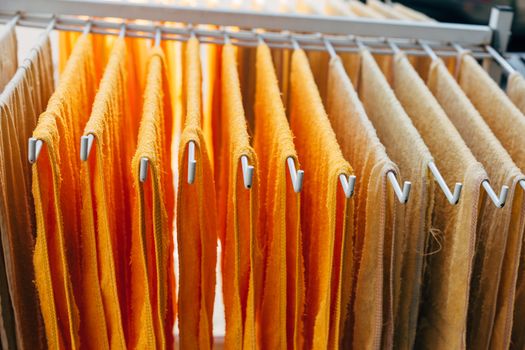
The dyeing and finishing stages are among the most polluting steps in textile production, traditionally requiring large amounts of water, chemicals, and energy. In response, innovators are developing waterless and low-impact dyeing technologies.
Supercritical CO2 dyeing, used by companies like DyeCoo, replaces water with pressurized carbon dioxide to infuse color into synthetic fabrics. This method eliminates the need for water and reduces chemical usage by over 50%. AirDye and similar technologies use heat and air to transfer dyes, using up to 95% less water than conventional methods.
Natural dyeing is also being revitalized, with advances in stabilizing plant-based dyes for industrial use. Combined with digital dye application, these methods can further limit resource use and reduce toxic runoff.
Another notable innovation is plasma finishing, which uses ionized gases to modify fabric surfaces without water or chemicals. Plasma treatments can impart water repellency, antimicrobial properties, or improved dye uptake, all while using minimal resources.
Transparency and Traceability: The Digital Backbone of Sustainable Textiles
Sustainability is not just about new materials or cleaner processes—it’s also about knowing exactly where and how products are made. Transparency and traceability have become essential as brands and consumers demand proof of ethical and eco-friendly practices.
Blockchain technology and digital product passports are being adopted to record every step of a textile product’s journey, from raw material sourcing to final sale. In 2023, over 40 major apparel brands began piloting blockchain traceability systems, according to the Textile Exchange. These systems make it possible to verify organic certifications, labor conditions, and environmental impacts in real time.
RFID tags and QR codes can also give consumers access to detailed information about a garment’s lifecycle, building trust and enabling better recycling at end-of-life. Enhanced traceability not only supports sustainability goals but also helps combat counterfeiting and ensures regulatory compliance.
Shaping the Future: The Road Ahead for Sustainable Textile Innovations
The textile industry stands at a crossroads, with innovative technologies reshaping how fabrics are made, used, and reused. Smart manufacturing is reducing energy and water consumption, while advanced recycling and biotechnologies are keeping materials in use and lessening the reliance on virgin resources. Eco-friendly dyeing and finishing methods are cleaning up some of the industry’s dirtiest processes, and digital tools are delivering unprecedented transparency.
Still, widespread adoption remains a challenge. Many of these innovations require significant upfront investment or new supply chain partnerships. Policy support, industry collaboration, and consumer education will all be crucial to scaling up these solutions and ensuring that sustainability becomes the new standard.
The good news is that momentum is building. In 2023, global investment in sustainable textile technologies reached an estimated $2.1 billion, up 35% from the previous year. As awareness spreads and technology costs fall, the textile industry’s transformation toward a circular, low-impact future is not just possible—it’s underway.