The Future of Technical Textiles: How Innovations are Transforming Industrial Applications
Technical textiles might sound like a niche corner of the vast textile industry, but their impact is ubiquitous and growing at an astonishing pace. From high-performance automotive fabrics to advanced filtration media and protective gear for extreme conditions, technical textiles are shaking up the way industries operate. Driven by rapid technological advances, sustainability demands, and ever-evolving industry needs, the future of technical textiles promises to be nothing short of revolutionary. But what exactly are these innovations—and how are they reshaping industrial applications across the globe? Let’s dive into the world of technical textiles and explore how tomorrow’s fibers, fabrics, and composites are fueling industrial transformation.
Understanding Technical Textiles: More Than Just Fabric
Technical textiles are engineered materials designed for function rather than fashion. Unlike traditional textiles, which prioritize aesthetics and comfort, technical textiles excel in performance—offering properties such as durability, flame resistance, high tensile strength, water repellence, and even electronic conductivity. According to Grand View Research, the global market for technical textiles reached $194.5 billion in 2023 and is expected to grow at a compound annual growth rate (CAGR) of 6.3% through 2030.
These textiles are classified based on their end-use, with major sectors including:
.png) - Agrotech (agriculture)
- Buildtech (construction)
- Geotech (civil engineering)
- Indutech (industrial)
- Medtech (medical)
- Mobiltech (transportation)
- Protech (protection)
- Sportech (sports and leisure)
- Agrotech (agriculture)
- Buildtech (construction)
- Geotech (civil engineering)
- Indutech (industrial)
- Medtech (medical)
- Mobiltech (transportation)
- Protech (protection)
- Sportech (sports and leisure)
Industries rely on these advanced materials for applications ranging from conveyor belts and fire hoses to wound dressings and automotive airbags. As new demands arise, technical textiles are positioned at the forefront of industrial innovation.
Smart Textiles: The Rise of Intelligent Fabrics
One of the most transformative trends in technical textiles is the emergence of smart textiles—fabrics embedded with sensors, conductive fibers, and actuators that allow them to interact with the environment or the wearer. Smart textiles are already making waves in industrial settings.
For example, companies like Textronics and DuPont have developed textiles capable of monitoring temperature, pressure, or mechanical stress, providing real-time data for predictive maintenance in manufacturing environments. In 2022, the smart textile market was valued at $3.1 billion and is projected to reach $13.3 billion by 2030, according to MarketsandMarkets.
Some industrial applications of smart textiles include:
- $1: Sensors woven into concrete-reinforcing geotextiles can detect cracks or weaknesses, aiding in timely repairs. - $1: Garments equipped with sensors can monitor workers’ vital signs or hazardous gas exposure, sending alerts in emergencies. - $1: Piezoelectric fibers convert mechanical energy from motion or vibration into electrical energy, powering small devices in remote locations.As connectivity becomes central in Industry 4.0, smart textiles are laying the groundwork for more responsive, data-driven industrial operations.
Sustainability Meets Durability: Eco-Innovations in Technical Textiles
Industries are under mounting pressure to reduce their environmental footprint. Technical textiles are embracing this challenge through eco-innovations that marry sustainability with durability—traditionally considered opposing goals.
Some key advances include:
- $1: Companies like NatureWorks and BASF are developing high-performance fibers from renewable sources such as PLA (polylactic acid) and biopolyamides. These fibers offer robust mechanical properties while decomposing more readily than petrochemical-based counterparts. - $1: New resin systems and fiber architectures enable easier recycling of technical textile composites used in automotive interiors and wind turbine blades. - $1: Technologies such as supercritical CO2 dyeing and plasma treatments minimize water usage and chemical discharge, cutting industrial textile processing emissions by up to 60%.According to Textile Exchange, the use of recycled polyester in technical textiles grew by 36% between 2021 and 2023. These green innovations are not just better for the planet—they also help industries meet increasingly stringent regulations and consumer expectations.
Advanced Manufacturing: Automation, 3D Weaving, and Digital Integration
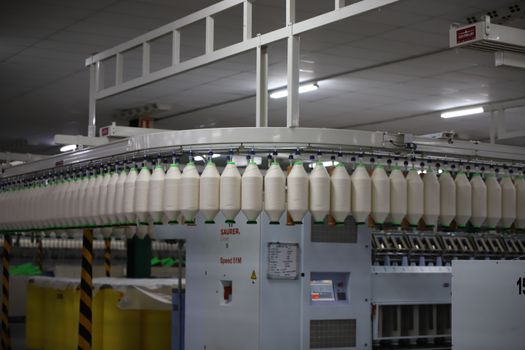
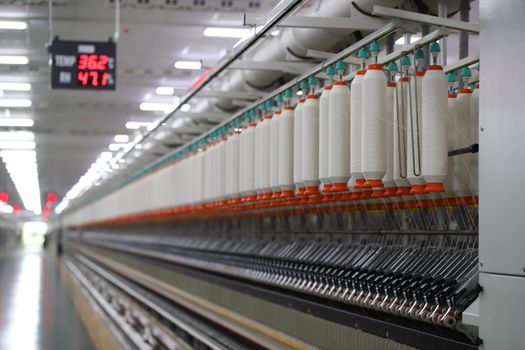
Innovation in technical textiles isn’t limited to the fibers themselves; the way they are manufactured is undergoing a digital revolution. Advanced manufacturing techniques are boosting efficiency, precision, and customization—critical factors in industrial applications.
Key developments include:
- $1: Technologies from companies like Stäubli and Karl Mayer allow for the creation of complex, multi-layered structures with precise control over fiber orientation. This leads to lighter, stronger components for aerospace and automotive uses. - $1: Automated cutting, sewing, and assembly reduce labor costs and improve consistency, especially in high-volume sectors such as filtration and protective clothing. - $1: By linking physical textile production to digital models, manufacturers can simulate stress tests, optimize designs, and reduce the need for costly prototypes.These advances are reflected in production metrics. For instance, 3D woven composite parts can be manufactured up to 40% faster than traditional layup methods, according to a 2023 report by the European Textile Industry Association.
Comparing Key Technical Textile Innovations in Industrial Sectors
Let’s break down how different innovations are impacting major industrial sectors. The table below summarizes notable advances and their benefits:
| Sector | Key Innovation | Benefits | Example Application |
|---|---|---|---|
| Automotive | Recyclable composites | Reduced weight, improved recyclability | Lightweight car interiors |
| Construction | Sensor-integrated geotextiles | Real-time structural monitoring | Bridge reinforcement |
| Medical | Antimicrobial coatings | Enhanced infection control | Wound dressings |
| Protective gear | Lightweight aramid blends | High strength-to-weight ratio | Firefighter suits |
| Filtration | Nanofiber membranes | Higher filtration efficiency | Industrial air filters |
This overview illustrates the diversity and depth of technical textile innovations across industries.
Emerging Frontiers: From Space Exploration to Circular Economies
The future of technical textiles is being shaped by bold new frontiers. Two particularly exciting areas are their expanding use in space exploration and the integration of circular economy principles.
- $1: NASA and the European Space Agency are developing ultra-light, radiation-resistant fabrics for space suits, habitats, and insulation. These textiles must withstand extreme temperatures, micro-meteoroid impacts, and cosmic radiation. In 2023, NASA’s Artemis program tested a new multi-layer insulation made from a combination of Nextel ceramic fibers and gold-coated Kapton, offering 30% better thermal protection than previous versions. - $1: Instead of linear “produce-use-dispose” models, technical textile manufacturers are piloting closed-loop recycling, where end-of-life products are collected, processed, and reborn as new textiles. Companies like Freudenberg and Aquafil are investing in take-back programs for industrial filtration media and carpeting, reducing landfill waste and resource consumption.With the global push toward sustainability and resource efficiency, these emerging frontiers signal both the adaptability and the limitless potential of technical textiles.
The Road Ahead: What the Future Holds for Technical Textiles in Industry
The technical textiles sector is on the cusp of dramatic change. As industries face unprecedented challenges—from climate change and resource scarcity to shifting consumer demands—innovations in technical textiles will be central to creating safer, more efficient, and more sustainable solutions.
Consider these trends that will likely define the next decade:
- $1: As industrial processes become smarter, technical textiles embedded with sensors and data capabilities will be the backbone of intelligent systems. - $1: Digital manufacturing will make it possible to tailor textile properties for specific industrial needs, from chemical resistance to biocompatibility. - $1: Regulations and economic incentives will drive closed-loop models, making recycling and reuse the norm rather than the exception.The technical textiles market is projected to surpass $250 billion by 2030, fueled by these innovations and the ever-growing demand for high-performance materials. For industries poised to embrace the future, technical textiles will be the silent yet essential partners in progress.